
Tri-Fold Brochures: Sizes & When to Use (Updated May 2026)
A tri-fold brochure is a single sheet of paper folded twice to create six panels — three on each side — that hand a prospect your whole story in a format that slips into a pocket, a rack, or an envelope. It is one of the most versatile print pieces a Houston business can put in front of customers: roomy enough to explain a service menu or walk through a process, compact enough to mail or hand out at an event. This guide covers what a tri-fold is, when it beats a flyer or rack card, the standard sizes, design tips that keep your copy off the fold lines, paper and coating choices, and exactly how to mail one through USPS.
Last updated: May 2026.
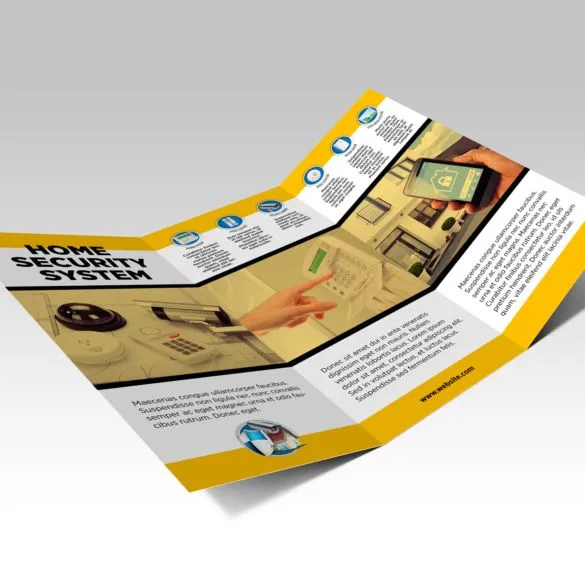
What Is a Tri-Fold Brochure?
A tri-fold — also called a letter fold — takes one flat sheet and folds it twice so the two outer panels wrap toward the center. The result is six usable panels: a front cover, a back panel, and four interior panels that open up like a small spread. That panel structure is what makes the format so useful. You get a cover to grab attention, an inside to deliver the detail, and a back that is perfect for contact info, a map, or a mailing area when you send it as a self-mailer.
Because it is a single sheet, a tri-fold is inexpensive to print in volume, light enough to keep postage low, and quick to fold and finish. That combination is why you see it everywhere from restaurant menus to real-estate listings to medical-office handouts.
Why Tri-Fold Brochures Still Work
Print is far from dead — a well-designed brochure puts something physical in a customer's hand that a banner ad never can. Here is why the tri-fold earns its spot in a marketing budget:
- Six panels of room. Enough space to explain a service, list a menu, or walk through a multi-step process without cramming.
- Pocket-sized and portable. Folds down small enough to fit a standard rack, a back pocket, or a #10 envelope.
- Cost-effective at volume. One sheet, two folds — the per-piece cost drops fast as quantities climb.
- Mailable. Sealed with tabs, a tri-fold becomes a self-mailer you can send through the post without an envelope.
- Professional and credible. A printed piece on good stock signals that you are an established business, not a fly-by-night.
When to Use a Tri-Fold (and When Not To)
The tri-fold is a workhorse, but it is not the right tool for every job. Reach for one when you have a story that benefits from sections — an introduction, the details, and a call to action that unfold in order. It shines for service overviews, event programs, product lines with several offerings, menus, and step-by-step explainers.
Choose something else when your message is short and visual. If you have a single offer, one date, or one bold headline, a flyer delivers more impact for less money. If the piece needs to stand up in a counter display or survive heavy handling, a sturdier rack card on thick stock often holds up better than a folded sheet. And when the goal is a quick, high-volume mailer, a postcard skips the folding and tabbing altogether.
Rule of thumb: if your message needs sections that reveal in order, use a tri-fold. If it is one punchy idea, use a flyer or postcard. Not sure which fits your campaign? Our team will tell you straight — we would rather print the piece that performs than the piece that costs more.
Tri-Fold Brochure Sizes
Tri-folds start as a flat sheet and finish at roughly one-third of the width once folded. The most-requested flat sizes — and what each is best suited for — look like this:
| Flat size | Folded size | Best for |
|---|---|---|
| 8.5" × 11" (letter) | ~3.67" × 8.5" | The standard brochure — fits racks and #10 envelopes; ideal for most businesses |
| 8.5" × 14" (legal) | ~4.67" × 8.5" | More room for menus, detailed services, or longer copy |
| 9" × 12" | ~4" × 9" | A premium, oversized feel with extra panel width for visuals |
| 11" × 17" | ~5.67" × 11" | Large-format brochures, catalogs, and image-heavy presentations |
The 8.5" × 11" letter tri-fold is the everyday default — it racks neatly and slides into a standard envelope. Step up to legal or 9" × 12" when you need more space or a more premium feel. See all options and request a layout on our tri-fold brochure printing page.
Design Tips That Keep Your Brochure Looking Sharp
A great tri-fold lives or dies on its layout. The biggest mistake we see is artwork that ignores the fold lines — headlines and faces that get creased right down the middle. Keep these rules in mind:
- Keep important content off the fold lines. Leave breathing room around each crease so no logo, headline, or key image lands on a fold.
- Mind the panel order. On a letter tri-fold, the right panel folds in first, so it is slightly narrower — design that panel a touch smaller so it tucks cleanly inside.
- Design front and back as one spread. Set up the inside three panels to read left-to-right as a single open layout, and the outside as cover, back, and the fold-in flap.
- Use 300 dpi images. Anything lower prints soft and pixelated. High-resolution photos are what make a brochure feel professional.
- Include full bleed. Extend backgrounds and images past the trim edge so you never get a thin white sliver after cutting.
- Limit fonts to two or three. One clean face for headings, one for body copy. More than that reads as clutter.
- End with a clear call to action. Put your phone, website, and a reason to act on a panel the reader sees last.
If layout is not your strength, our graphic design team builds print-ready tri-folds with the folds, bleeds, and panel widths handled correctly from the start.
Paper & Coatings
Stock changes how a brochure feels in the hand and how it folds. For tri-folds we typically print on anything from 80# text up to 14pt cover:
- 80#–100# text — lighter and more flexible, folds easily, and keeps mailing weight (and postage) down. The go-to for most mailed brochures.
- 100# cover to 14pt — thicker and more substantial, with a premium feel for high-end pieces. Heavier stocks fold best with a score.
For coatings, choose gloss for punchy, vivid color, matte or satin for an elegant, readable finish, or UV for a high-shine, durable coat on pieces that get handled a lot. Coating also protects against scuffs and fingerprints during distribution. Explore stocks and finishes on our brochure printing page.

How to Mail a Tri-Fold Brochure
One of the tri-fold's best tricks is doubling as a self-mailer — a piece you mail on its own, with no envelope. But you cannot just drop a folded brochure in the mail and hope it survives. USPS requires that a folded self-mailer be sealed closed with tabs or wafer seals so it does not pop open and jam their automated equipment. Skip the tabbing and your mailing gets rejected or surcharged.
Here is the short version of mailing a tri-fold:
- Design with a mailing panel. Reserve space on one outside panel for the address, your return address, and the indicia or stamp area.
- Fold and seal with tabs. Apply USPS-compliant wafer seals or tabs on the open edge so the piece stays shut in the mailstream.
- Prep the mailing. Whether it is a targeted list or a saturation drop, the brochure gets addressed, sorted, and submitted to the post office.
We handle the folding and tabbing in-house, so your tri-fold goes from press to mailbox without a hitch. You can confirm current self-mailer rules and prices anytime on the official USPS prices page.
Tri-Fold Brochure FAQ
How many panels does a tri-fold brochure have?
Six. A tri-fold is one sheet folded twice, giving you three panels on the front and three on the back — a cover, a back, and four interior panels.
What is the most common tri-fold brochure size?
The 8.5" × 11" letter size, which folds down to about 3.67" × 8.5". It fits standard brochure racks and slides neatly into a #10 envelope.
Can I mail a tri-fold brochure without an envelope?
Yes. A tri-fold can be sent as a self-mailer, but USPS requires it to be sealed shut with tabs or wafer seals so it does not open up in their automated equipment. We handle the tabbing for you.
Should I use a tri-fold or a flyer?
Use a tri-fold when your message has sections that unfold in order — a service overview, a menu, or a step-by-step. Use a flyer when you have one strong, visual message and want maximum impact for less cost.
What paper is best for a tri-fold brochure?
Most brochures print well on 80#–100# text for easy folding and low mailing weight, or up to 14pt cover for a premium, substantial feel. Add a gloss, matte, satin, or UV coating to protect the piece and sharpen the color.
Do you offer design help for brochures?
Yes. Our graphic design team builds print-ready tri-folds with correct fold placement, bleeds, and panel widths so your artwork never lands on a crease.
Ready to Print Your Tri-Fold Brochure?
Catdi Printing designs, prints, folds, and mails tri-fold brochures for Houston businesses in every common size, stock, and finish — and we will tell you honestly whether a tri-fold, flyer, or postcard is the right call for your campaign. Browse our tri-fold brochure options or request a free quote today. Prefer to talk it through? Call us at (713) 882-4629 and we will help you build a brochure that actually gets read.